Residential Electrician Repairs That Keep Winter Power Reliable

Winter puts a different kind of strain on a home’s electrical system. The pressure does not always come from one dramatic failure. More often, it builds quietly. Space heaters get plugged into old bedroom circuits. Furnace blowers run longer. Sump pumps cycle more often during freeze-thaw swings. Holiday lighting adds load at the same time that the service equipment outside faces cold, moisture, and wind.
That combination is why winter electrical reliability is rarely about a single fix. It is about a series of smart repairs, each one addressing a weak point before it becomes a cold-night outage, a tripped breaker that will not reset, or a dangerous overheating condition hidden behind drywall. A seasoned Residential Electrician learns to look for those weak points in a pattern. One homeowner complains about flickering lights when the heat kicks on. Another says the garage freezer and outdoor receptacles stop working after a wet snow. A third notices a burning smell near the panel only when several appliances are running at once.
These are not random annoyances. They are clues.
Why winter exposes electrical problems faster
Electrical systems can coast through spring and fall while hiding age, poor workmanship, and undersized circuits. Winter strips away that margin. Loads increase, daylight decreases, and more equipment runs at the same time. Heating equipment, humidifiers, air handlers, heat tape, well pumps, de-icing controls, and kitchen appliances all compete for capacity. Even homes with gas or oil heat rely heavily on electricity to run blowers, ignition systems, circulation pumps, and controls.
Cold itself changes how parts behave. Brittle insulation cracks more easily. Exterior boxes collect condensation. Corrosion inside disconnects and service equipment becomes more noticeable when current draw rises. Connections that were only slightly loose in October can start heating up in January. That heat can damage breaker stabs, melt insulation, and create the kind of intermittent faults that frustrate homeowners and technicians alike.
I have seen homes where the only complaint was “the lights dim a little when the microwave runs.” By mid-winter, the same house had a scorched neutral bar in the panel. The problem was not the microwave. It was a loose neutral connection that became obvious only when winter loads stacked up.
The panel repair work that matters most
If I had to choose one place where winter reliability is won or lost, it would be the main electrical panel and the equipment feeding it. Homeowners often picture panel problems as all-or-nothing failures, but the more common issue is degraded performance under load.
A Residential Electrician checking a panel for winter reliability pays close attention to heat marks, corrosion, double-tapped breakers where they do not belong, loose neutrals, aging breakers that trip inconsistently, and signs of moisture entry. Not every old panel is automatically unsafe, but age plus heavy winter demand is a combination that deserves respect.
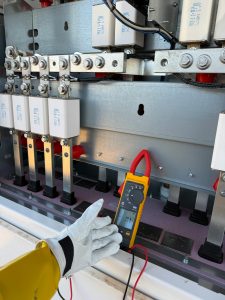
Loose terminations are one of the most important repair items. Conductors expand and contract over time, and a connection that was never torqued correctly in the first place may hold for years before causing visible trouble. The warning signs are subtle at first: flicker, nuisance trips, slight buzzing, or a breaker face that feels warmer than neighboring breakers. Left alone, those symptoms can turn into arcing and burned bus connections.
Breaker replacement also matters, though it should be done for the right reason. Swapping a breaker because it trips is not a real repair if the underlying load is excessive or the circuit has a fault. Still, breakers do wear out. I have opened panels where a breaker would reset mechanically but fail electrically under moderate demand. Winter is when that weakness shows up.
Older service panels sometimes reveal another problem, limited capacity. That does not mean every home needs a full service upgrade, but some do. If a house relies on portable heaters across multiple rooms because the heating distribution is uneven, or if a finished basement added electric baseboard heat years ago without proper load planning, the system may be operating too close to the edge.
Repairs for circuits that carry the heaviest winter load
Not all circuits age at the same rate. The ones serving heating-related equipment, kitchens, laundry areas, garages, and basements tend to show trouble first in winter because they work harder and more often.
Dedicated appliance circuits deserve careful inspection. Furnaces and boilers need stable power. A failing service switch, loose whip connection, or poorly spliced thermostat transformer feed can create maddening no-heat calls that look mechanical at first. It is not unusual for an HVAC technician to find the equipment itself is fine, while the actual issue is voltage drop or intermittent loss of power upstream.
Basement circuits are another common repair area. Sump pumps, dehumidifiers, freezers, and utility lighting often share circuits in older homes. Add one temporary heater during a cold snap and the breaker starts tripping at the worst possible time. When the sump pump is on the same overloaded circuit, that nuisance trip can become a water problem as well as an electrical one.
Garage circuits tell their own story. Battery chargers, refrigerators, snow-melt tools, and outdoor receptacles all tend to converge there. In many houses, the garage was wired when expectations were lower. What once supported a garage door opener and one light bulb is now asked to run a full workshop and seasonal exterior equipment. Winter exposes that gap fast.
Sometimes the right repair is straightforward, such as replacing damaged receptacles, remaking loose device connections, or separating overloaded devices onto proper dedicated circuits. Other times, the answer is adding a new branch circuit because the original design no longer matches how the home is used.
Outdoor components fail harder in cold, wet conditions
The outside portion of the electrical system does not get much attention from homeowners until something stops working. Yet exterior repairs are some of the most important for winter reliability.
Service entrance equipment, meter bases, exterior disconnects, weather heads, and outside receptacles take a beating from temperature swings and moisture. Water intrusion is especially destructive because it often causes intermittent faults before complete failure. A homeowner may report that exterior plugs work fine for weeks and then suddenly trip after wet snow or freezing rain. That pattern usually points to compromised gaskets, cracked covers, or corrosion inside the box.
A good repair here is not cosmetic. Replacing a broken in-use cover, resealing an exterior penetration, or changing a corroded receptacle to a weather-resistant type can prevent repeated winter outages on a circuit. More importantly, it reduces shock risk in damp conditions.
Service mast and overhead connection issues can also surface during storms. Tree movement, ice loading, and wind do not always tear conductors down dramatically. Sometimes they just loosen old attachment points or worsen existing wear at the weather head. If lights brighten and dim noticeably during gusty weather, that can indicate a service connection problem that should be treated as urgent.
I once looked at a home where the complaint was simple: “The upstairs lights flicker when the wind picks up.” The cause turned out to be a deteriorated service connection and moisture in the meter socket. That is not the kind of issue to monitor casually through the season.
GFCI, AFCI, and nuisance tripping in winter
Protective devices are valuable, but they can be misunderstood. Winter tends to bring more nuisance tripping complaints, especially in garages, unfinished basements, exterior receptacles, and older circuits retrofitted with newer protective devices.
A GFCI that trips during wet or freezing conditions may be doing exactly what it should. The fault may be in an exterior cord, a damp receptacle box, a failing sump pump, or a freezer with insulation breakdown beginning in the compressor area. Replacing the GFCI without finding the cause often leads to repeat calls.
AFCI devices create their own set of winter complaints, particularly when aging motors, worn cords, or poor splices begin arcing under heavier load. Homeowners sometimes assume the breaker is too sensitive. Sometimes they are right, particularly if a brand-specific breaker line has a known reputation for nuisance behavior, but just as often the breaker is the first thing pointing to a real defect.
The best repair approach starts with pattern recognition. Does the trip happen only when a space heater and vacuum run together? Only during wet weather? Only when the furnace starts? Those details matter. They help distinguish between overload, ground fault, arc fault, and weak breaker performance.
The hidden danger of backstabbed devices and loose receptacles
One of the most common repair categories in older homes is the simple receptacle or switch connection that has loosened over time. Backstab terminations, where conductors are pushed into the rear of certain devices, are notorious for developing poor contact after years of heating and cooling cycles. In mild weather, the symptom may be barely noticeable. In winter, when current draw rises, the failure becomes obvious.
A bedroom receptacle feeding several downstream outlets might look normal while generating heat inside the box every time a portable heater runs. A hallway switch may feel warm because the splice behind it is failing. Homeowners often describe these conditions vaguely, saying things like, “that plug seems fussy,” or “we have to wiggle the cord sometimes.”
Those are not small details. A Residential Electrician takes them seriously because loose device connections are one of https://privatebin.net/?0d2f5ae1949154e6#2QdKwYgXwzuMgy6uoNDnVjPeA9NqgkasZCWxgXS3E5qK the clearest examples of a repair that prevents both inconvenience and fire risk. Replacing worn devices, moving conductors to secure screw terminals, remaking poor splices, and evaluating box fill can restore reliability without major disruption to the home.
When flickering lights point to a neutral problem
Few winter electrical symptoms deserve faster attention than unexplained flickering or uneven brightness across different areas of the house. If one load starting up causes lights elsewhere to dim sharply, or if some lights get brighter while others get dimmer, a neutral issue should be suspected until proven otherwise.
A failing neutral can occur at a branch circuit, subpanel, service disconnect, meter connection, or utility-side service point. The seriousness varies, but the potential damage is real. Electronics do not tolerate unstable voltage well. Neither do appliance motors and modern heating controls.
What makes neutral problems tricky is that they can come and go. Cold mornings may produce one symptom, damp afternoons another. Wind may change the pattern. That is why homeowners should not wait for a complete outage before calling. If the whole house behaves strangely under changing loads, the problem has already moved beyond nuisance territory.
Repairs that support backup power and storm readiness
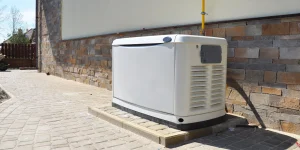
Many homeowners focus on generators only after they lose power. By then, electrical weaknesses are already in the spotlight. If a house has a portable generator setup or a permanently installed standby unit, winter reliability depends on the transfer equipment and connected circuits being correct and maintained.
The generator itself is only part of the picture. Inlet boxes, interlock kits, transfer switches, grounding and bonding arrangements, and selected emergency circuits all need to be evaluated as a system. I still see homes where well-intentioned owners believe they are prepared because they own a generator, yet the inlet wiring is undersized, the neutral handling is wrong, or critical loads were never separated logically.
Even without a generator, storm readiness often leads to worthwhile repairs. A basement sump pump on a clearly identified dedicated circuit is easier to support with backup power. A furnace circuit with sound connections and proper disconnecting means is less likely to fail during a utility restoration surge. Labeling in the panel, while not glamorous, can make a very real difference when someone is trying to restore essential loads quickly in a cold house.
Warning signs that should not wait until spring
Some electrical issues can be scheduled calmly. Others deserve prompt attention, especially in winter when losing power has wider consequences for plumbing, heating, and safety.
- Breakers that trip repeatedly under normal use
- Receptacles, switches, or cords that feel warm
- Flickering lights tied to appliance or furnace operation
- Burning smells, buzzing, or visible discoloration at the panel
- Exterior outlets or garage circuits failing after snow or rain
Any one of these signs can point to a repairable issue. What turns them into serious problems is delay.
Why space heaters create so many winter repair calls
Space heaters deserve their own discussion because they are involved in a remarkable number of winter electrical failures. The reason is simple. Most portable heaters draw a large amount of current for long periods, often on circuits that were never intended for that type of load.
A 1,500-watt heater on a standard 120-volt circuit draws roughly 12.5 amps. On a 15-amp branch circuit, that leaves very little room for anything else, especially once continuous-use considerations and real-world connection quality are factored in. Put that heater on an older circuit shared with lamps, electronics, or another room, and the weak link appears quickly.
Sometimes the breaker does its job and trips. Other times, the trouble shows up at the receptacle first. Melted faces, browned insulation, and failed plug blades are common findings. The heater gets blamed, but the deeper issue is often an aging or damaged connection that the heater simply exposed.
A practical repair strategy may include replacing the damaged receptacle, tracing all upstream connections on the circuit, and advising the homeowner on where a heater can and cannot be used safely. In some homes, the long-term fix is improving the primary heating distribution so portable heaters stop being necessary in the first place.
What homeowners can do before calling, and what they should not do
Homeowners do not need to diagnose every electrical issue themselves, but a little observation helps. Notice whether the problem affects one room or the whole house. Pay attention to whether it happens during wet weather, during furnace startup, or only when several appliances run at once. That kind of information helps a Residential Electrician narrow the cause much faster.
There are also clear limits. Opening a panel, replacing breakers without proper testing, or bypassing tripping devices to “get through the cold snap” is not a reasonable workaround. Winter is exactly when temporary electrical shortcuts become dangerous. The stakes are higher because heat, water control, food storage, and emergency lighting may all depend on the same system.
A better approach is to gather useful observations and act early. Small symptoms rarely improve on their own.
The repairs that often deliver the best return
Not every winter reliability job requires a major upgrade. Some of the most valuable repairs are targeted and modest. The skill lies in choosing the work that removes actual failure points rather than chasing symptoms one by one.
- Tightening and correcting panel terminations where appropriate
- Replacing failing breakers and damaged bus-connected components
- Repairing or separating overloaded branch circuits
- Upgrading exterior receptacles, covers, and weather-exposed connections
- Reworking loose device terminations and worn receptacles inside the home
When these repairs are chosen well, the benefit is immediate. Breakers stop nuisance tripping. Lights steady out. The furnace starts reliably. The garage freezer stays powered. The sump pump has a dependable circuit when weather turns ugly.
Good winter electrical work is about judgment
There is a difference between replacing parts and solving reliability problems. Winter repair work rewards electricians who understand patterns, load behavior, moisture intrusion, aging materials, and how people really use their homes when temperatures drop.
That judgment shows up in small calls. A tripping garage GFCI might be an exterior box filling with meltwater, not a bad receptacle. A dimming-light complaint might be a service neutral issue, not “old wiring.” A breaker that keeps tripping on a furnace circuit might be protecting a failing blower motor, not failing itself. The best results come from treating the house as a connected system rather than a collection of isolated parts.
For homeowners, the lesson is simple. If the electrical system has been giving hints, winter is not the season to ignore them. Reliable power in cold weather depends on good repairs made in the right places, by someone who knows how winter changes the job. That is where an experienced Residential Electrician brings real value, not just by restoring power after a failure, but by preventing the failure that would have mattered most.
Paxos Electric Company, LLC
255 NJ-15, Wharton, NJ 07885, United States
+1 973-598-8543
FAQ About Residential Electrician
What does a residential electrician do?
A residential electrician installs, inspects, maintains, and repairs electrical systems in homes. Common services include troubleshooting circuits, replacing panels, adding outlets and lighting, and completing electrical work for renovations.
When should I call an electrician for my home?
Call a licensed electrician if you notice repeated breaker trips, flickering lights, buzzing, burning odors, warm outlets, sparks, or unexplained power loss. Urgent warning signs should be addressed promptly.
Can a residential electrician upgrade an electrical panel?
Yes. A qualified electrician can evaluate the existing service, determine whether an upgrade is appropriate, obtain required permits, and install a panel sized for the home and planned electrical loads.
Do I need an electrician to install an EV charger?
A home EV charger often needs a dedicated circuit and a review of panel capacity. A licensed electrician can confirm the manufacturer requirements and complete the installation according to local electrical codes.